Avoidance, Creative Work, and Balancing Multiple Interests

Writing, Reading, Hacking and Making Music: My Room
My Room

This is a bit of a personal ramble.

Gerald Klickstein had a great post on the Music Think Tank blog about avoiding avoidance:

Do you ever dodge your creative work? Say, your practice time arrives, and you race off to do some chore. It might be a chore that you detest, but now it calls to you. Then, instead of refining your music, you start cleaning the house or doing whatever. [...]

When we practice, write, or otherwise innovate, we stretch our limits. We strive.

But striving takes us into the unknown, and that brings uncertainty. [...] If the uncertainty of creating unsettles us, then, to escape the discomfort, we might seek refuge in a mindless task: “This really needs doing,” we’ll congratulate ourselves as we reach for the mop.

So true. I set aside afternoons to work on my music, but often end up catching up on email, cleaning, doing laundry, or running errands. It’s so easy to avoid that difficult creative work.

Klickstein has a solution:

First we have to notice an avoidant thought before we fall under its spell. Next we must act to do what we intend. [...] As I see it, we’re all going to have avoidant thoughts, so we need to keep countermoves handy. Here’s my anti-avoidance formula:

Counter Avoidance

  1. Notice an avoidant thought.
  2. Dispute it. (Laugh at yourself or just say “no.”)
  3. Replace it with an affirmation: “Music feeds my soul.”
  4. Act with full intention.

It’s great advice, but I still find myself struggling. I have so many distractions that aren’t just chores or busywork. I spent a lot of my “music” time in the fall revamping my website, which is important for my music, but it isn’t my music. Also, there’s always the temptation to put more hours in to my other jobs, especially when I have clients waiting on me; it’s hard to spend an afternoon focused on songwriting when I have a separate deadline with a client bearing down on me. And, lately, I’m spending a lot of time on music, but not my music; I’m writing arrangements for the Hart House Chamber Strings pops concert, which is an amazing opportunity for me to write arrangements and work with some of my favourite local artists, but only a small percentage of the concert involves my songs. Even when I work on music, it’s not always my own.

Then, there’s the issue of multiple creative endeavours. I’m a songwriter, but I also try to set aside time for writing (like this) and for programming. It’s easy for one of these activities to overshadow the others.

I defer to Adam Singer, someone whose several steps ahead down a road I’d like to travel:

By day I work for one of the top search/social marketing firms globally. At night I keep this marketing/media/PR blog and participate in industry conversations around the web. I also write music. In between all of that I read 1-2 two non-fiction/sociology books and some 300 blogs monthly (I’m a knowledge-junkie). I also don’t do any of these things halfway, they are not fleeting interests – I’m fully committed.

[...] It took me years to develop the self-discipline necessary to split time across interests and get fulfilling results in all of them.

Today I thought I would share the process I took to get to the point of balancing multiple pursuits. If you also have multiple interests and are frustrated you’re not able to devote enough time to them, this might help.

He lists 10 pieces of advice (I’m just listing the titles, but you can read the post for more detailed descriptions.)

1. Internalize what outcomes you want from each interest first
2. Define what specific activities support your desired outcome from that interest
3. Remove everything else

It’s an ongoing process, but I’m inspired by the steps I’ve made in the past few years in narrowing down the sorts of things I want to accomplish in different areas. The picture is constant evolving, and becoming clearer. One of my goals going forward is to speak more publicly about the things I’m working on.

It is a challenge to remove everything else though. I have a hard time saying no to many things (e.g. I need to do less Windows tech support…).

4. Automate or outsource all collateral activities

I lot of the time I’ve spent working my website, or figuring out 64 Studio factors into this… At times it feels like I’m spending so much time not making music, but I’ve been streamlining my process of recording and sharing recordings, which is essential going forward.

5. Your career should be an interest

Check.

6. Learn to ignore others who tell you to focus on one thing

This is incredibly encouraging. One of the common sayings that haunts me is “jack of all trades, master of none.” (I prefer “master of some.”) Sometimes, I feel like I’m spreading myself too thin, trying to be too many things. There is a way.

7. Focus time where your mind is naturally drawn during free time

This is also encouraging, given the variety of my pursuits… but, I think it’s also essential to make sure there is time set aside for each activity in the long run. While it makes sense, on a micro-level, to focus where the inspiration and motivation is present, on the macro-level I’m still trying to find the best way to make sure that none of my interests are neglected for too long. That’s the real challenge.

8. Learn patience and dedication
9. Be grounded in reality, realize life is short

Sound, but basic advice.

10. Remember that focusing on one and only thing is mentally limiting

I don’t need to be reminded of this. Some people have one thing that they can do well and focus on, but I’ve always had multiple passions.

About 10 years ago, I remember my mom sitting me down for one of those overly-concerned parental talks. “It’s great that you’re so passionate about music and computers,” she said, “but… you need other interests too, you need to be balanced.” After listing off a variety of other hobbies at the time (basketball, skiing, cross country—just in the athletics department), I reassured her that I was interested in a healthy balance of things—and that I just really enjoyed music and working with computers.

That was Grade 7. Five years later, applying to universities, I was looking at music and computer science/engineering programs. I ended up choosing computer science at U of T, not just for the program (which is fantastic), but because it allowed me maximum freedom to study other things as well; music and engineering programs offered very few electives. I began thinking I’d do a music minor, but ended up choosing English instead. Last June, I graduated with a major in computer science, and minors in English and philosophy (as I like to say: Plato, Python and Shakespeare).

And now, I’m continue to work part-time at Alleyne Inc., while the rest of my time is spent on music and writing. (I’m also doing a couple graduate-level credits in theology this Spring, but not quite sure where that will lead…)

For me, it would be extremely mentally limiting to focus on just one thing.

The challenge, moving forward, is to find balance between multiple creative interests, avoiding avoidance and narrowing in on my creative goals.

Rambling out loud like this will likely be part of the process…

Comments (1)

Family Room Computing

Old monitor
Credit: exfordy [CC BY]

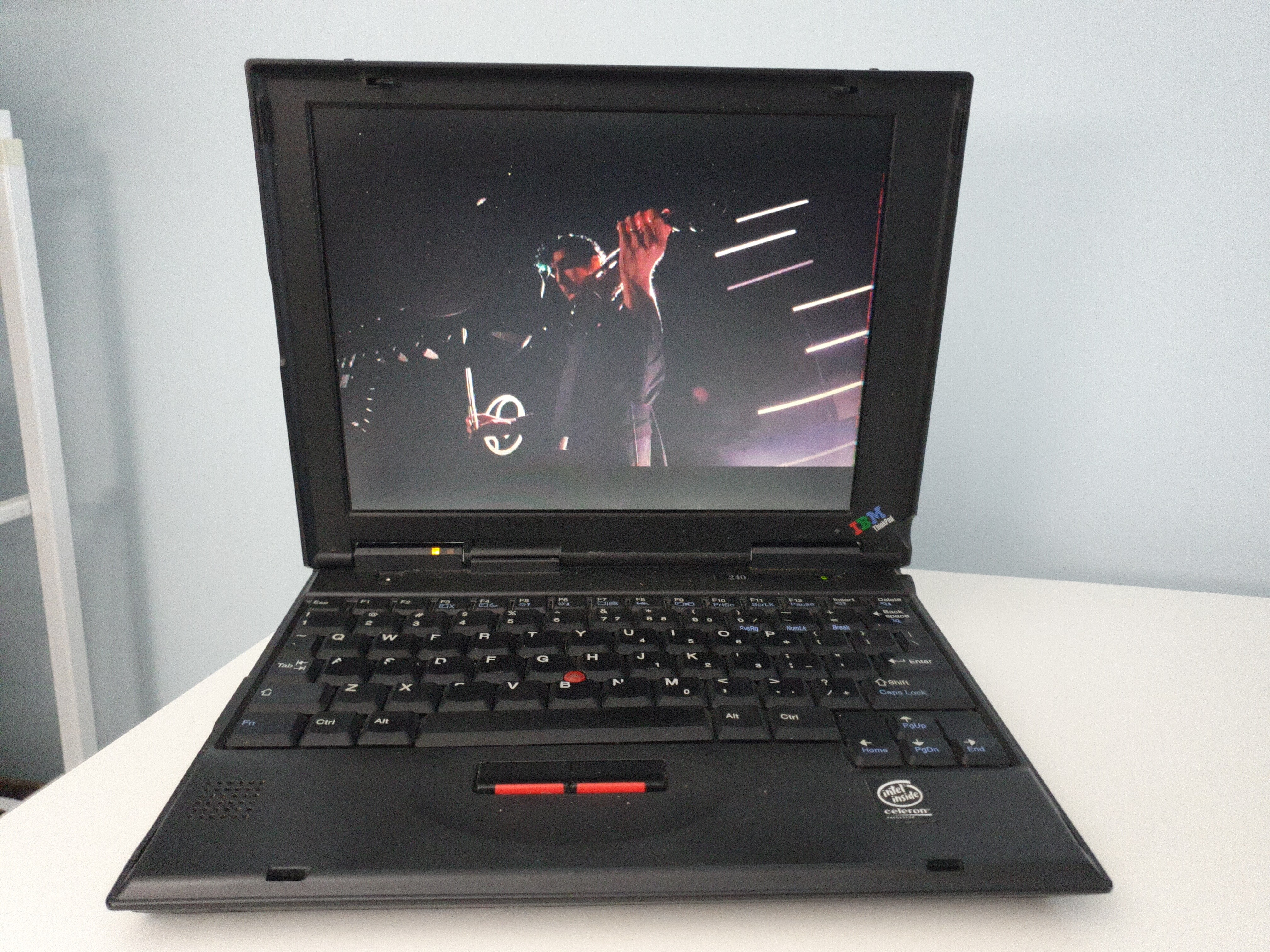
My first computing experience was on the family computer, a 386 running Windows 3.1 in my parents’ den. It was truly a family computer—my parents used it for work, and the kids used it for games. A few years later, my parents moved to IBM ThinkPads with Windows 95 (vehicles for my first Internet experiences, dialing into chat rooms to talk about my dog with strangers… I was 9!), but the kids’ computer was still the shared desktop. When the 386 was no longer able to run our games, it was replaced with a new Windows 98 desktop. That shared kids’ computer spent most of its life out in the open, in our family room.

In the next five years, our home computing landscape changed drastically. I got my own desktop when I started high school in 2001. A few years later, I acquired a laptop after a summer trip overseas, and my two siblings (3 and 6 years younger) both got recycled older desktops in their rooms for homework. My desktop became the new kids’ computer, but it was quickly phased out as gaming shifted to consoles and my siblings got upgraded machines. By 2005, our computing took place in separate rooms.

But in 2007, I entered the free software world and developed an interest in bringing old neglected Windows machines back to life with GNU/Linux. I bought a TV tuner card, and turned my old Windows 98 desktop into a MythTV server (among other things). It was an odd project, since I rarely watch TV, but soon enough I had another old computer connected to my MythTV server and setup on the big screen TV in our family room

I soon realized that we didn’t just have a new way of watching TV, but a fully-featured PC hooked up to a giant screen. With a couch and a wireless keyboard, I began using it to browse the web and consume other forms of media (especially useful when we had company!) and even used it for some work (handy for group projects!). It provided a stark contrast to the tethered appliance computers nearby—an XBOX 360 and a Rogers HD PVR (which broke!).

I don’t want any proprietary tethered appliances when I move out. I want a general purpose computer that opens up to the room—not a personal computer that family members take turns using, or a TV that people just watch, but a group computer that brings other people into the computing experience.

With a general purpose computer, I can specialize with software (MythTV for television channels, Firefox for web content, etc.). MythTV is cool, but video is moving from TV to the web—why not focus on that? I don’t know of a real group user interface for general purpose operating systems yet (i.e. like on video game consoles), but a big display goes a long way to involving a room in the meantime. I’m also fascinated to think about how handheld devices fit into the picture, with large tablets for media consumption or smaller tablets as controllers.

A TV is just a big screen. I’d rather have a computer I can own, control and create with hooked up to it, instead of the black box proprietary tethered appliances that commonly broadcast into a room. I don’t want a “home entertainment system;” I want a shared computing experience.

Is there a name for this? I’ve been calling it “family room computing”—or just “room computing”—but suggestions are welcome. I’m just getting some rough thoughts out. What do you think family room computing could look like, with computer users in charge?

ps that original family room computer? It’s still semi-set up in our basement—I installed Debian on it a few years ago to give Fluxbox a try!

Post a Comment

How is a three strikes proposal supposed to work for mobile data?

Honestly, I still have trouble convincing myself that the push by the record industry to implement a three-strikes-and-you’re-out (that is, three-accusations-and-you’re-kicked-offline-for-a-year) system is actually happening, that grown men and women running companies claim—with a straight face—that this will save failing business models. It’s just so ridiculous. But the IFPI’s recent claims that it can surgically remove one person from the Internet without affecting the rest of a household have got me thinking about mobile data. Cellular providers are becoming Internet Service Providers. Would three accusations of unauthorized file sharing cut you off from mobile data too? What’s to stop someone from getting a 3G USB stick to connect to the Internet? Either the record industry is that much more ridiculous and they’re also taking on mobile carriers, or there’s another giant loophole in an already insane plan.

Post a Comment

I’ve Pad Enough — It’s 1984 for Apple

Defective by Design -- Apple Restriction Zone

Just hours before the iPad announcement yesterday, I wrote the following:

When we think of mobile computers as merely “phones,” we tolerate restrictions that we would otherwise reject on our computers. How many iPhone users would come to Apple’s defence if they instituted the same strict policies and arbitrary limitations on third-party applications for a Macbook as they do on their mobile computer?

The iPad is a general purpose computer with precisely those restrictions.

Today, Apple launched a computer that will never belong to its owner… By making a computer where every application is under total, centralized control, Apple is endangering freedom to increase profits… Their record of App Store rejections and removals gives us no reason to trust them. The iPad’s unprecedented use of DRM to control all capabilities of a general purpose computer is a dangerous step backward for computing and for media distribution.

Talk about lockdown. I’m still waiting for them to ban third-party apps on Macbooks that haven’t been approved through the app store. The Vista bodyguard may be annoying, but with new Apple products, there’s simply no “allow” button. Apple has become what it sought to destroy.

It’s worth quoting the rest of that paragraph from yesterday’s blog post:

Recognizing that these devices are really mobile computers is an essential step to gaining control over our mobile computing. Carriers and handset makers control our phones. We should control our own computers.

The same goes for tablets (and for “TVs” for that matter). Say no to computers that can’t be ours.

Comments (3)

It’s Not A Phone, It’s A Mobile Computer

Nokia N900
Credit: mackarus [CC BY]

People keep asking me about my new “cell phone,” but the Nokia N900 isn’t a phone. It’s a handheld, mobile computer. Calling it a phone is like calling a house a bed—sleeping is just one thing you do inside a house.

I became interested in the Nokia N900 in the fall, and after a several good reviews, I ordered one off eBay earlier this month. The N900 is the first from a series of Nokia Internet tablets to have cellular capabilities, but the SIM card doesn’t overshadow all the other things you can do with the device—it just frees you to connect to the Internet on the go. The day after it arrived, I signed up with WIND Mobile (another contributing factor to the purchase: leaving Rogers). The combination of a powerful mobile computer, and unlimited 3G data for just $35/month has changed the way I use the Internet.

Yes, it can handle phone calls and SMS messages, but it’s totally arbitrary that a call is a cellular call as opposed to over Google Talk or SIP / VOIP, or that a message is SMS rather than IM; the same applications are used in either case. I can use it as a cell phone, but I can also use it as an Internet tablet, GPS, digital audio player, camera, etc.

Maemo, the operating system that comes installed on the N900, is a fully-featured GNU/Linux distribution. Android shares a common (ish) kernel with other Linux-based distributions, but Maemo has much more in common with the operating system running on my laptop. It uses the same system for finding and installing new software, and it has a lot of the same applications available, since it’s easier to port from other GNU/Linux distributions. Rather than forcing developers to write Java “apps,” Maemo makes a variety of common development environments available. Thus, it’s the first platform to see a Firefox mobile release.

It’s a computer, not a phone. And it’s not just semantics. When we think of mobile computers as merely “phones,” we tolerate restrictions that we would otherwise reject on our computers. How many iPhone users would come to Apple’s defence if they instituted the same strict policies and arbitrary limitations on third-party applications for a Macbook as they do on their mobile computer? (Update: I spoke literally hours too soon.) Recognizing that these devices are really mobile computers is an essential step to gaining control over our mobile computing. Carriers and handset makers control our phones. We should control our own computers.

Google has tried to replace the term “smartphone” with it’s own buzzword — “superphone” — but it’s not just the “smart” part that’s become inadequate. It doesn’t make sense to call these devices “cell phones” anymore than it would make sense to call the buildings we live in “beds.” I have a handheld computer, and my carrier is my ISP.

ps I wrote and edited this post on my N900 using MaStory

Comments (3)

Copyright Infringement and the Theft Metaphor

I’ve got a new post up at Roots Music Canada, why copyright infringement isn’t theft, which draws on William Patry’s book, Moral Panics and the Copyright Wars, to explain that theft is a poor metaphor for copyright infringement.

Canadian law professor Stephen Waddams, in a well-regarded book about how we think about law, wrote that when a dispute arises about intangibles, such as copyrighted works, information, or… time,
“[T]he claimant is always eager to categorize the claim as proprietary. Thus, the conduct of the defendant is apt to be described by claimants as piracy, highway robbery, and brazen theft. This is rhetoric: the taking of a photograph, the re-broadcasting of television signals, the use of confidential information, or the copying of a design cannot, in fact or law, be piracy, robbery (on or off the highway), or theft, and if it were any of these things, the rhetoric would be unnecessary…

[...] Describing someone as a thief or trespasser is a metaphoric step in gaining property rights, and not the result of having a property right in the first place. If one already had a property right, the property owner would sue for violation of that right and would not have to strut around… blaring loudly about “piracy.”

[...]

Copyright owners [describe] their right as “intellectual property.” The purpose of advocating something as a property right is to take it outside of the need for any empirical, social justification. As a property right we do not ask about incentives, and we do not ask whether the property interest benefits the public. Property simply is and need not be justified. Those who own property rights are entitled to hunt down unauthorized users as free-riders, as criminals, as a threat to polite society just as surely as who break into our homes and steal our cars.

Copyright law isn’t about theft and clearly fenced-off property. It’s a set of social relationships between creators and the public, granting creators certain exclusive rights, for a limited time, for the benefit of everyone. Abusing the theft metaphor shifts the focus away from the fundamentals of copyright, making it difficult to have any sort of meaningful or fruitful discussion about copyright.

I think it’s possible to present an informed and intellectually honest case for stricter copyright laws, but table-thumping about how copying is stealing is neither of those things.

The post was in response to table-thumping by some members of the community that, “there’s no grey area, it’s theft,” and that “it is now completely possible for ISPs to identify and eliminate illegal file sharing.” It could be interesting if those folks show up in the comments

Post a Comment

Niagara Falls New Year’s Eve Performance with Robyn Dell’Unto


Photo by Ed McAskill

I’ve been in love with Robyn Dell’Unto from the moment I first heard her voice, and it’s been almost two years now since we became friends and she first introduced me as her secret weapon.

This past Thursday, we had the opportunity to perform at the Niagara Falls New Year’s Eve party on the main stage. Though our set was cut short, it was a fantastic experience. We made it onto the Global TV national broadcast for about a minute, and I’ve stumbled upon some great photos taken by Ed McAskill (including some outstanding shots of me).

Robyn has been taking off recently, getting signed with Orange Lounge and having her music featured on CBC’s Being Erica season finale and other TV shows. She’s started work on her first full-length album, and it’s only going to get more exciting from here… I hope she remembers me when she’s famous!

Comments (1)

Taking a Free Culture Approach to Music

This post originally appeared on Roots Music Canada.

When I tell someone that all of my recordings are downloadable for free, I’m often asked, “but… how will you make money?

“Well,” I’ll respond, “since it doesn’t cost me anything, I may as well let people share and listen to my music so that they might connect with it and become interested in the associated scarcities—physical goods, the creation of new music, authenticity, personalization, live performances, etc… It makes more sense to charge for the scarce things than for the abundant. People need to hear and like music before they’re willing to buy, so I want people to download it.”

“Okay,” a musician might respond, “and you still have royalties and licensing.”

The fun begins: “Er… no, actually, my music is available royalty-free, even for commercial use.”

“Huh?”

“Yep,” I’ll continue. “There are only two requirements: attribution, and that derivative works remain under the same licence. Otherwise, people are free to do what they want.”

At this point, the person I’m talking to is either incredibly curious, or convinced that I’m certifiably insane.

Why on earth would I do this?

Copyright Conundrum

Copyright is supposed to provide an incentive for authors to create because we, as a society, see a benefit in more works being created. However, it’s been radically expanded in both depth and breadth. Unlike the original 14-year terms, copyright now extends well beyond the author’s death; works used to enter the public domain within a few decades, but now it takes a few generations. Also, it used to be that copyright only regulated large corporations—you needed a printing press or a broadcast tower to trigger the law—but now it affects the everyday activities of anyone with a computer.

It’s become an astonishingly unprecedented restriction on our culture. Can you imagine if Shakespeare had to negotiate licensing agreements for each of the stories he repurposed? Yet, some seek to criminalize sharing and we must hire lawyers to get permission just to build on the culture around us. We must pay [PDF] for the privilege of dancing to copyrighted music. James Boyle, author of The Public Domain, said that “we are the first generation to deny our own culture to ourselves.” Society has become too focused on the unnatural notion of “intellectual property.”

20th-century culture was largely passive and read-only—a broadcast culture. But it’s wonderful and natural that we seek to reinterpret and build upon the culture we find around us, and it’s exciting that digital technology makes it easier. Creation is a fundamentally social act—not a solitary one—and its social dimension is something to be celebrated; it’s a beautiful expression of our humanity. I embrace an active culture with which we all have the freedom to engage… but current copyright law makes that illegal. James Boyle also points out that “no work created during your lifetime will, without conscious action by its creator, become available for you to build upon.”

As a creator, I’ve taken that conscious action to set my work free.

Free Culture

I use a Creative Commons (CC) Attribution-Share Alike (BY-SA) licence for all of my music and writing (including this post). CC BY-SA is a free licence—not free as in price, but free as in freedom. A free culture is the opposite of a permission culture: anyone has the freedom to use, share, remix, cover, rewrite or adapt my music.

Now, “remix” can be a funny word for songwriters. For some, the immediate word association is “techno,” but derivative works can include music videos, films, new songs, covers, as well as recordings that are “remixed” in the strict technical sense. I can also take freely licensed photos from Flickr to use as artwork for my songs. “Free culture” isn’t about quirky viral videos and the responses they inspire, but the broad spectrum of possibilities when freedom and collaboration can scale. Using a free licence opens up new potential for creating art and connecting with fans by removing the legal barriers to artistic freedom and widespread collaboration.

Commercial Use

Free licences allow commercial use: my music can be sold—by me, or anyone else—and I’ve waived the right to collect royalties. This was by far the biggest hurdle.

Most CC licences aren’t free. I initially used a Noncommercial (NC) licence with my band back in 2005—that seemed like a no-brainer at the time—but I later became convinced of the problems with NC restrictions. For example, NC restrictions limit derivative works to the realm of the hobbyist; once money enters the equation, NC licences still present a permission culture (hence their non-free status). Plus, NC restrictions rule out many basic uses you might want to allow: a blog with ads or a non-profit fundraiser could both qualify as commercial, and a remix of your own NC music by someone else is off-limits to you commercially. NC restrictions don’t allow a free culture to flourish… but, they do leave the door open for music licensing opportunities.

Giving up the prospect of royalties and licensing was hard. Ultimately, I decided that free culture and new media were more important for me. Copyright restrictions apply to bloggers and webcasters as well as radio stations, and SOCAN collects from large corporate radio, but also from kids’ gymnastic clubs and buskers. I’d rather focus on free culture and the Internet as a passion and competitive edge than be confined by a read-only, broadcast-based permission model. Royalties make as much sense on the Internet as they would in a conversation; it’s not broadcast, it’s a communications medium. I’ve decided to go the free culture route with the Internet in mind, even if it means no royalties from traditional mediums.

Exploitation

CC BY-SA is a “copyleft” licence—meaning, all rights reversed; it imposes a copyright restriction against restricting people: all derivative works must be released under the same licence. Someone is free to include my music in a video and sell it, but the derivative work must also be BY-SA, so I’d be able to profit from the derivative in the same way that people can profit from my original. It’s mutually beneficial. (If someone wanted to use my work without “sharing alike,” e.g. a TV show, with many other rights holders involved, that’s one case where traditional licensing is still an option.)

In terms of someone else just selling my stuff (e.g. CDs with my music), I’ve come to view that as an opportunity rather than a liability. If Sony wanted to distribute my music, with no cost or contract on my part… who am I to complain? They’d be helping me. CC BY-SA filmmaker, Nina Paley, argues that when others make money off your content, it’s free market research. “If any [competitors] do exceptionally well, I’ll know what merch I should be selling,” she says. Paley uses the Creator-Endorsed Mark to signal to consumers which distributors are actually sharing profits with her. Brad Sucks, a Canadian BY-SA musician, has also found ways to profit while allowing commercial use.

If you’re focused on innovating and monetizing real scarcities, allowing commercial use simply presents new opportunities.

Moving Forward

Licensing my music freely was a huge decision, and I’ve only scratched the surface of my reasoning here. I may have closed many doors, but I’m excited about the doors I’ve opened. This approach isn’t going to work for everyone, but with artists like Nina Paley and Brad Sucks paving the way, I’m committed to exploring how it can work for my music.

Read the comments on Roots Music Canada

Post a Comment

Approaching 1.0

I had a bit of a moment yesterday.

It’s just that I’m so incredibly excited and energized right now. I’m starting to move on a variety of really cool projects and endeavours.

A little over a year ago, I claimed I was about to “up the diversity” on this blog. Better late than never. Here’s me committing to actually begin talking about a Catholic case for free culture. I have been giving it a lot of thought and making lots of notes, but I just need to get over the urge to write an essay instead of blog post so that I can start getting the ideas out.

The other theme I hope to explore in depth is the full potential of a true free culture approach to transform music. I’ve had some fascinating conversations with Nathan Simpson, Roman Verzub, Matt York and Josh Newman, and I’ve been putting the pieces in place at blaise.ca/music to start turning some of these ideas into action. I plan to expand on this at length in future posts.

I feel like these two ideas will be prominent themes in much of what I do in the next few years, and beyond.

Then, there’s the work I’ve been doing on the Drupal Creative Commons module and, more recently, the new Creative Commons Canada website (hope to have something to show soon…), among many of the other cool things I get to do through Alleyne Inc. My band is showing signs of life again, and I’ve been gigging on violin. I’ve also been part of a great team with the University of Toronto Students for Life, and I’ll be putting on another pops concert with the Hart House Chamber Strings in February. The day after that, I’m headed to Philadelphia for a week-long immersion course with one of the leading scholars on the Theology of the Body.

Oh, and I’m getting married next summer.

I’m hitting the release candidate stage for version 1.0 of my life. And there are a lot of things I’m going to create.

Comments (1)

Love is desire for the beautiful

This may be over the top, but it’s the kind of crazy I’m feeling right now.

This is as close to pregnant as I’ll ever get.

I am teeming with desire, overflowing with a yearning to release this energy, to create something beautiful. So overwhelmingly fertile, I strive for that moment of giving birth in beauty. Overcome by the potential for real unity, I move forward with purpose and resolve, with being and intention, in search of the complete, of an expression of a truly generative love.

This is creativity. This is sex. This is beauty.

More to come…

Comments (2)